What is suppression?
If you or your child has been diagnosed with suppression, this blog is for you. Suppression is a tough concept to understand. It is invisible to you, your child, and everyone who interacts with them - except their optometrist.
Suppression refers to the process of the brain turning off, or suppressing, part of the vision in one eye. Suppression is very common in people who have strabismus, or eye turn (see image 1). When the eyes don’t look at the same place, the brain receives two very different images. This will cause double vision, which is very uncomfortable (see image 2). To avoid this discomfort, the brain will suppress, or turn off, part of the vision in one eye. The person usually is not aware that this is happening.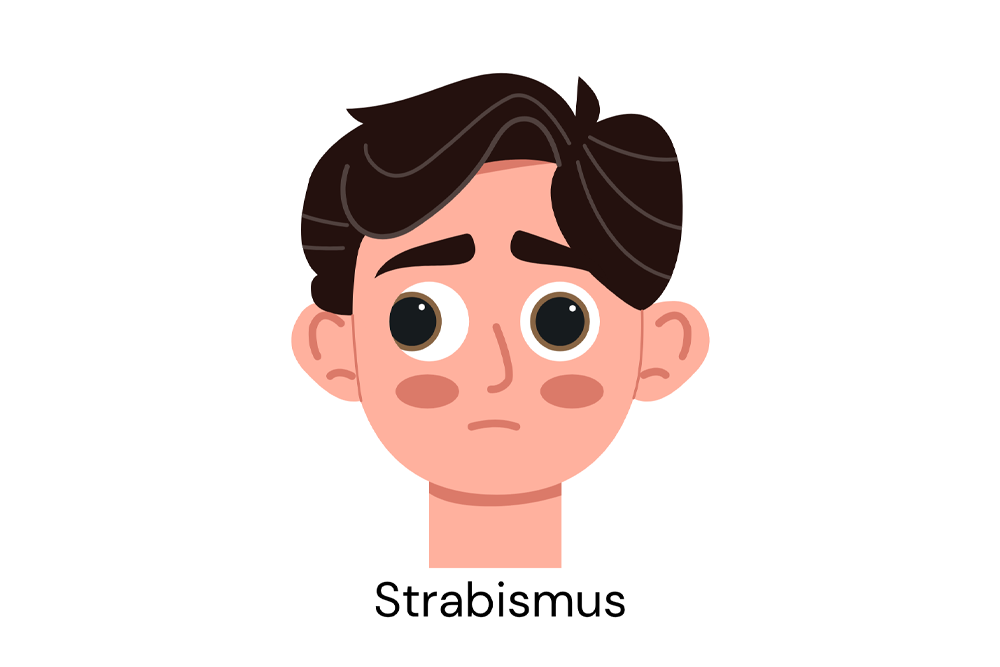

Double Vision
At first, suppression may seem to be beneficial. It allows someone to avoid double vision. However, suppression actually has a negative effect. It is an active process and drains energy from the brain. It also requires the fellow eye to work much harder than it is designed to. Imagine running a race with only one leg; you would use much more effort than your competitors who are running with two legs. You would also likely be the last one to finish. In the same way, performing visual tasks require more effort and take longer for people with suppression.
Suppression can also be present in people whose eyes look straight to a casual observer. Conditions that cause a microscopic misalignment of the eyes, like convergence insufficiency, can trigger suppression. In this condition, the eyes do not converge, or turn in, when the person looks at a near object, like a book. Initially, this causes double vision. With time, the brain begins to suppress one eye to avoid seeing double. This has serious consequences for children in school and adults in the workplace. They are putting in too much effort for the task and can easily fall behind. Because the eyes appear normal, few people ever think that there could be a vision problem.
Common symptoms of suppression include:
Head tilt or turn when reading
Poor eye-hand coordination
Poor reading comprehension
Poor sports performance
Short attention span
Clumsy, knocks things over
Avoidance of near tasks like reading
Suppression is not permanent. It is an adaptation that the brain has learned. By teaching the brain to use both eyes together, suppression can be cured. Vision therapy is the only proven treatment for suppression. Similar to physical therapy or speech therapy, the process of vision
therapy changes pathways in the brain so that the habit of suppression is eliminated. Vision therapy teaches the brain a new way to see, with both eyes having equal input.
If you or your child has been diagnosed with suppression, call us to schedule a vision therapy evaluation. At this visit, we will assess how much suppression is present and how long treatment will take. You can reach us at 5122295911
All Eye
Care Services

Keep
In Touch


Our Services
Contact Info

Hours of Operation
- Monday Closed
- Tuesday 9:00am - 6:00pm
- Wednesday 9:00am - 6:00pm
- Thursday 9:00am - 6:00pm
- Friday 9:00am - 6:00pm
- Saturday 9:00am - 4:00pm
- Sunday Closed
© 2026 Small Wonder Eye Care. All rights Reserved. Accessibility Statement - Privacy Policy - Limited English Proficiency Policy - Sitemap
Powered by: